Racks Per Hour in Practice: Photos and Numbers from Three Oberon Installations
A school canteen moving 4,000 trays in one meal window, a central kitchen running twin crate lines, and two compact wash stations — racks per hour, water per ra...
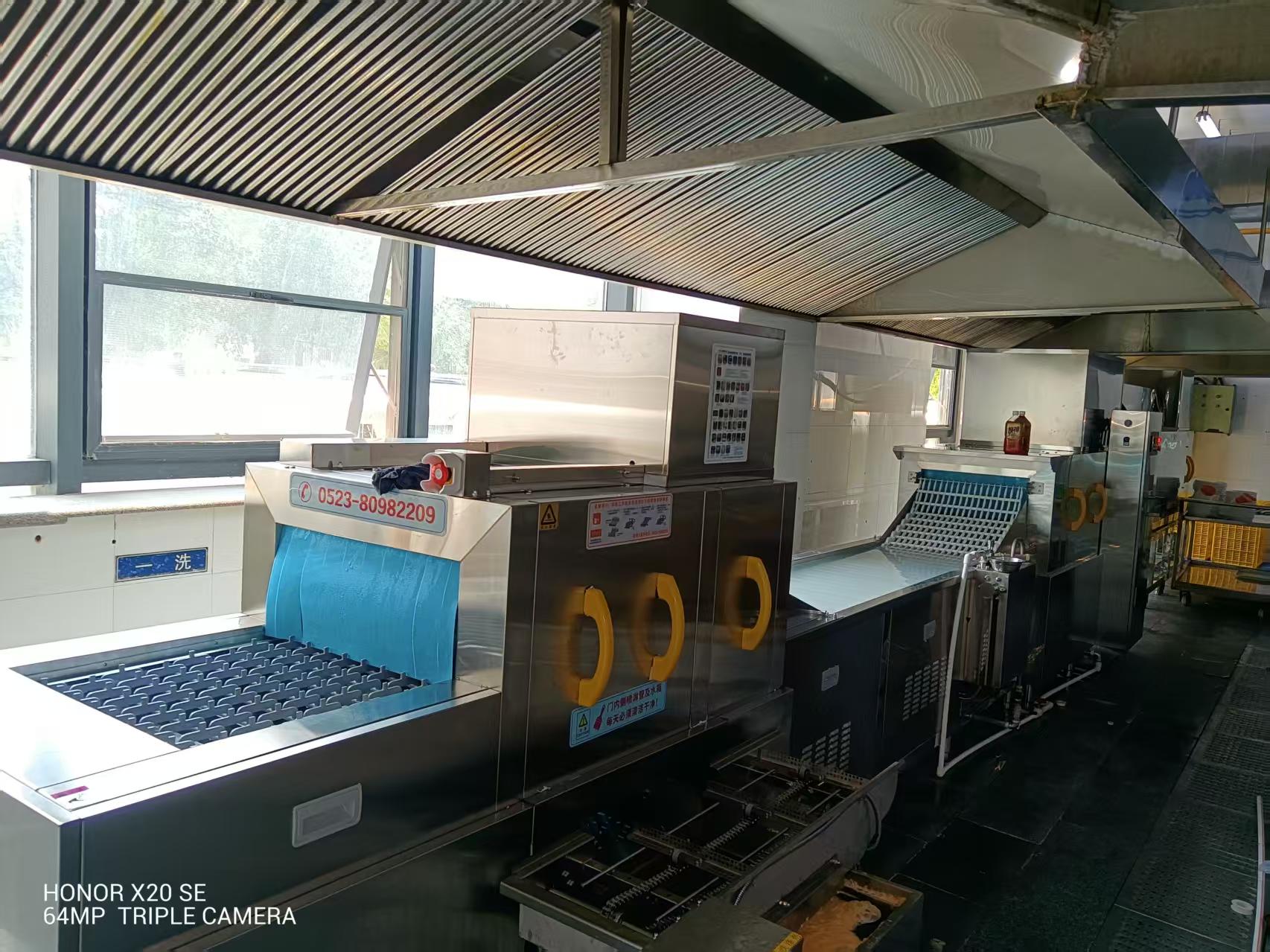
Racks per hour is the number every buyer asks about, and the number most quote sheets hide behind footnotes. This case study shows what that number looks like on real floors — a school canteen dishroom, a stainless central kitchen, and a restaurant wash station — using photos from recent Oberon installations.
The school canteen line: 4,000 trays through one meal window
Canvas for thought: a school canteen that serves lunch to 2,000 students in 45 minutes collects roughly 4,000 trays, bowls, and cutlery baskets in that window. Hand washing at 6 staff moved about 90 racks in the same period — and the queue outside the dishroom kept growing.
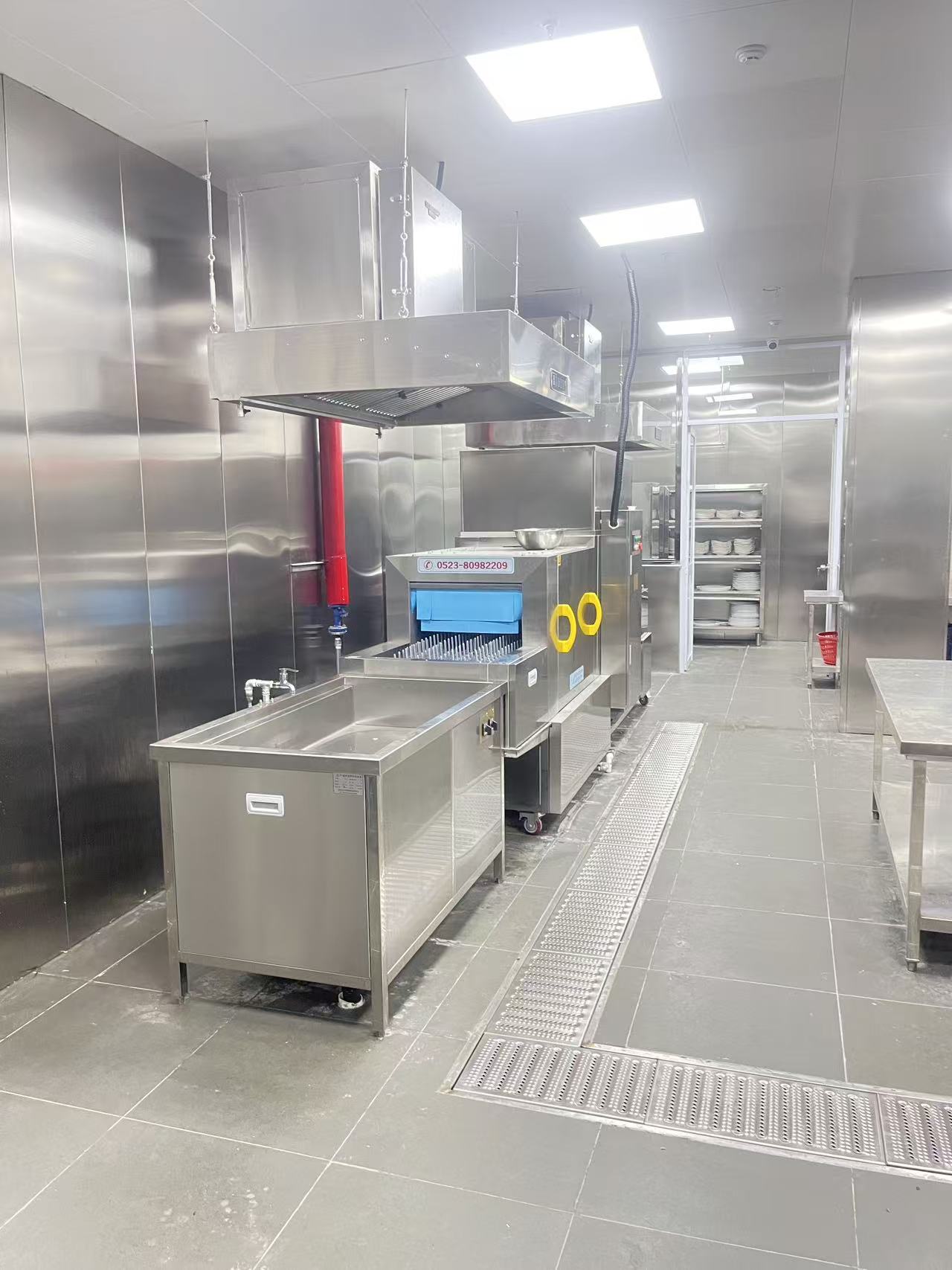
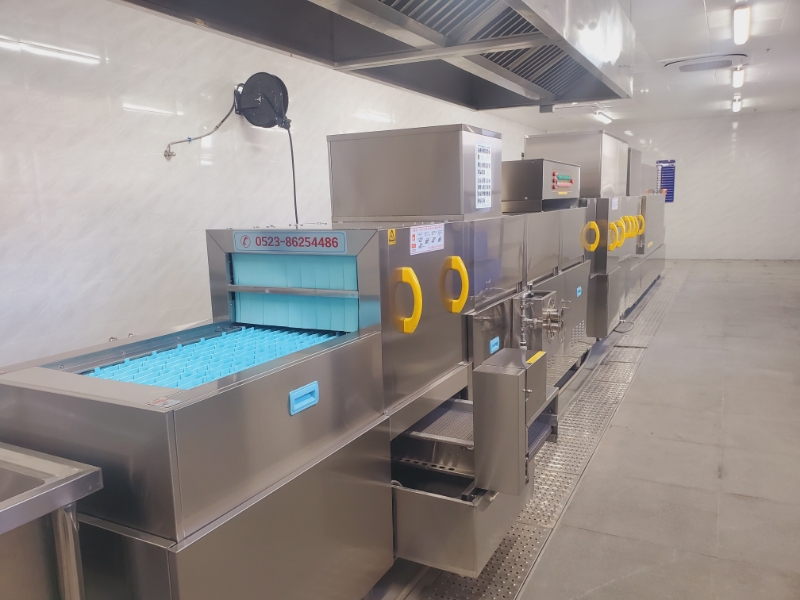
The installed answer was a rack conveyor line: an entry table with pre-scraping basin, a single-tank rack conveyor dishwasher, and a clean-side exit table. Blue curtain strips at the entry and exit keep steam and splash inside the machine. On the floor, the line runs 60 to 90 racks per hour with 2 staff — one feeding, one collecting.
What changed in numbers the kitchen manager shared with us:
- Tray turnaround from drop-off to stack-ready: under 4 minutes
- Dishroom staff at peak: from 6 to 2
- Water per rack: from roughly 4 liters (hand flow) to 2.2 liters
Central kitchen: two crate lines running side by side
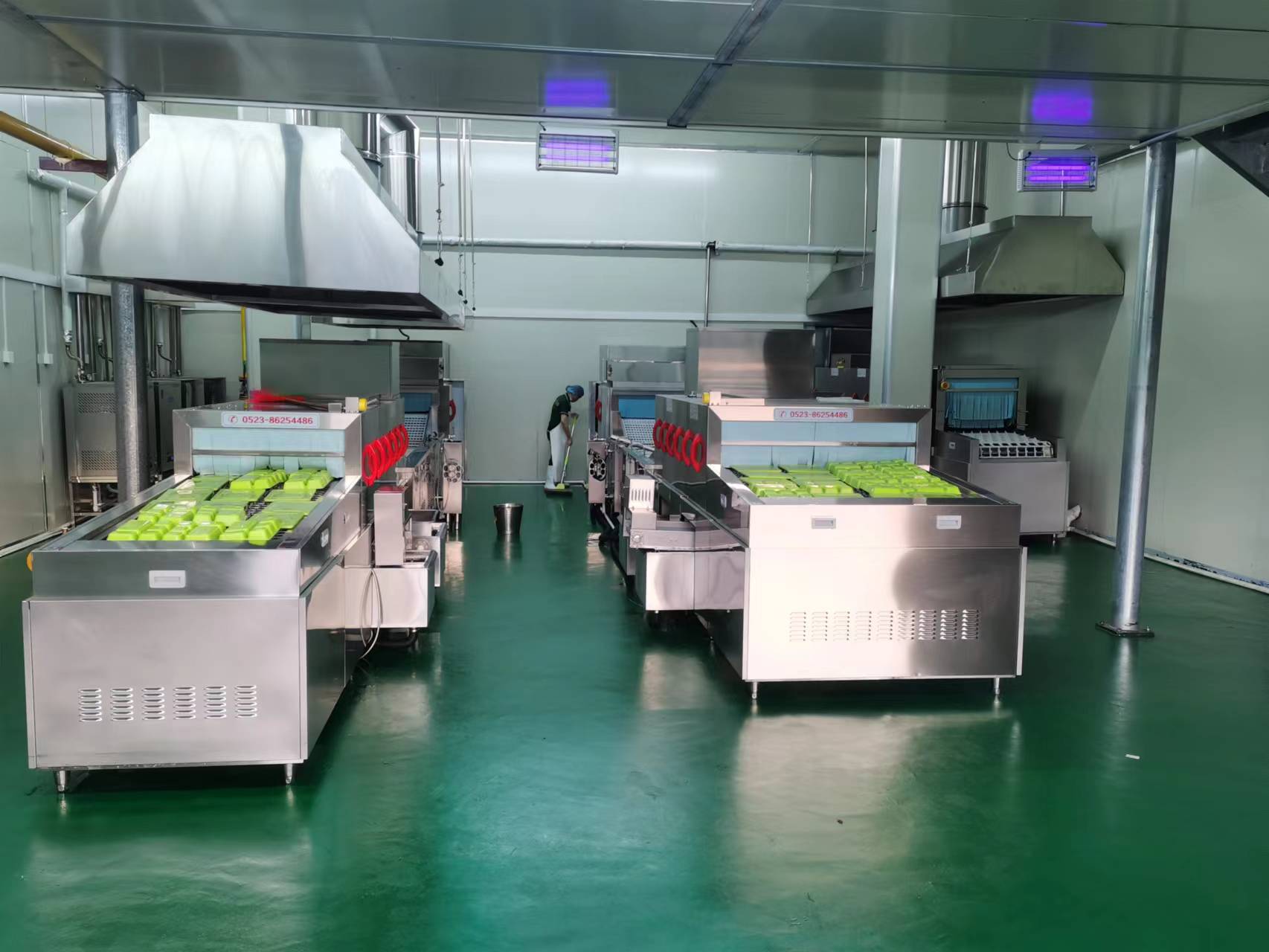
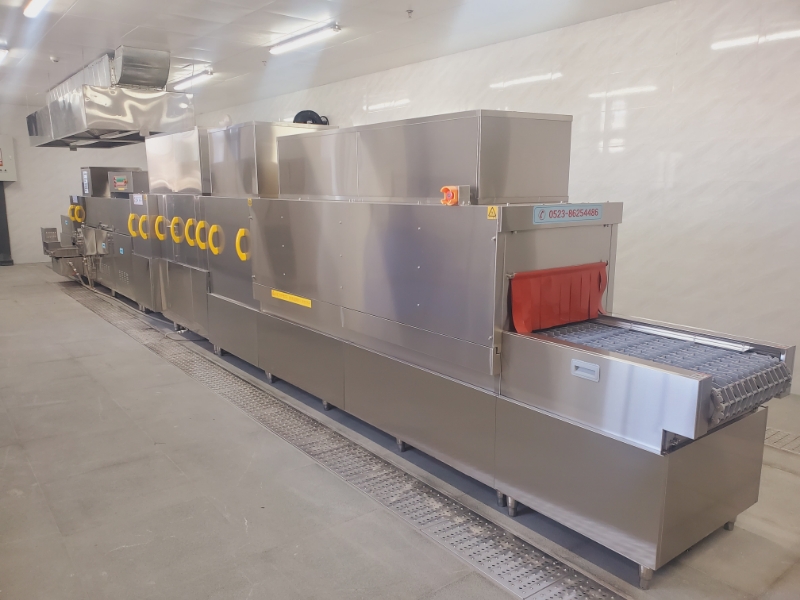
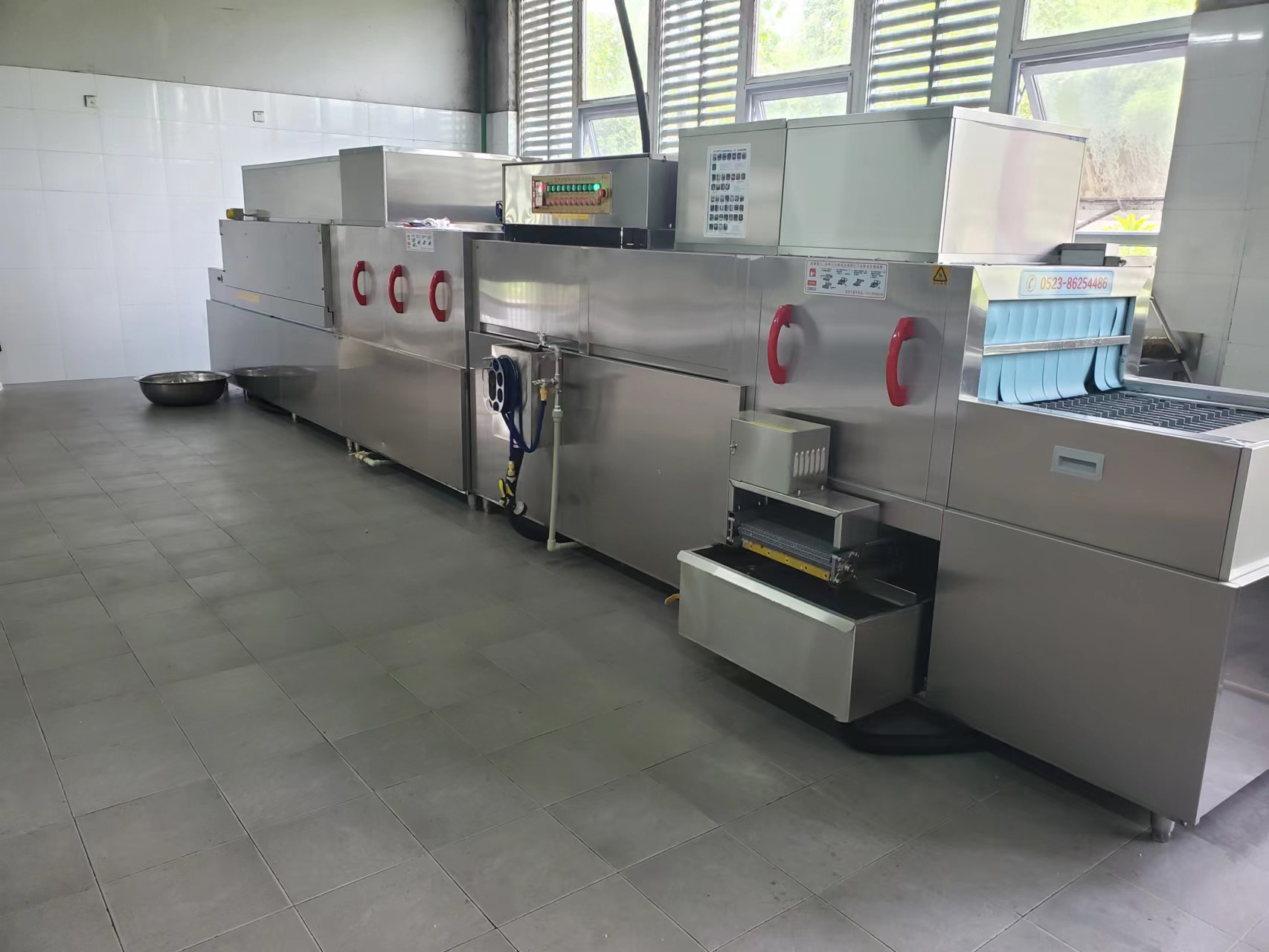
A central kitchen producing 30,000 meals a day washes crates, not plates. The floor photo below shows twin crate washing lines, each with an upturn section that empties crates before washing — liquid waste drains, solids collect in the detashing drawer, and the washer handles the empty crates at higher belt speed.
Green crates enter soiled and leave dry enough to stack immediately. The two lines run on alternating shifts during harvest peaks; between runs, the open layout gives one worker full visual coverage of both machines.
Restaurant stations: when a full line is more than the room needs
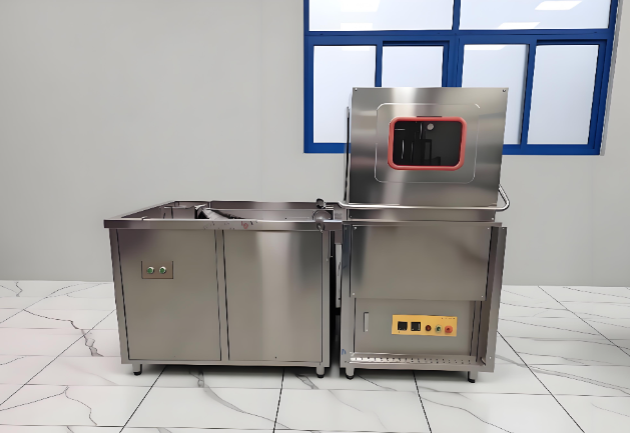
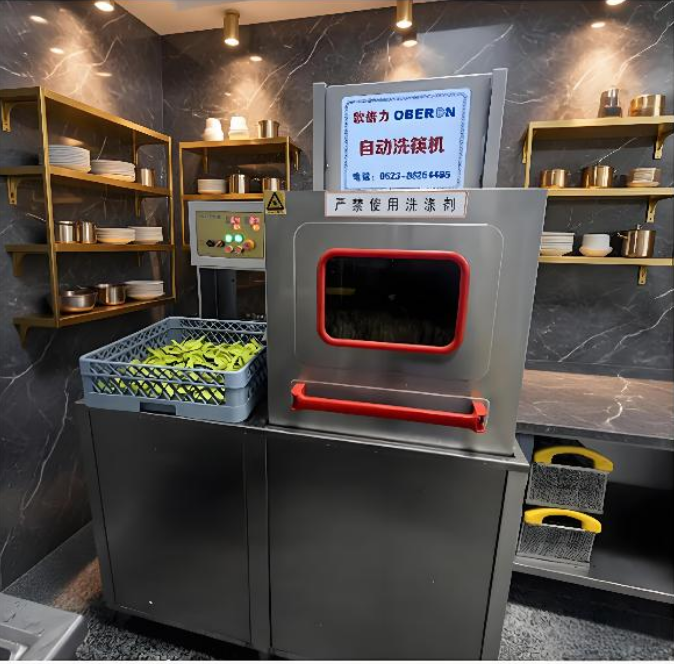
A restaurant wash station does not always need meters of conveyor. Two undercounter installations from this batch show the compact end of the range: a soiled-side table with scrap basin feeding a hood-type machine, and a stand-alone undercounter unit placed beside a service counter. Both run standard 500×500 mm racks, which keeps the per-rack math simple when comparing with larger lines.
More from the same installations
Stainless kitchens behave differently before and after the line arrives — the photos below show hood-type and flight type installations at handover, with drainage trenches and condensate hoods already in place.
What these floors have in common
Three decisions show up in every smooth installation, regardless of machine size:
- Layout before machine. Soiled drop-off, wash, clean staging in a straight line — the photos all show one-direction flow, no cross-traffic.
- Floor drainage sized for the worst hour. Trench drains along the whole line, not a single point drain.
- Rack standard from day one. 500×500 mm racks across the site keep every machine interchangeable and the per-rack cost comparable.
How to read racks per hour on a quote sheet
When two machines both claim “high capacity”, check three rows of the specification:
- Rated racks per hour — and at what soil level the rating was tested.
- Tank heating power — recovery speed between racks decides whether the rated number survives your peak.
- Water per rack — 2 L and 4 L look similar on paper and diverge into a second utility bill over a school year.
Oberon’s own ranges are published openly: rack conveyor lines, flight type systems, and undercounter machines each list capacity, power, and water figures on the product page.
Planning a canteen or central kitchen line?
Send us your meal count, peak window, and floor plan — Oberon application engineers will return a layout drawing with a racks-per-hour calculation for your specific tray mix, drawn from installations like the ones above.