Hand Washing vs Commercial Dishwasher: Labor Costs, Water Savings, and Payback Timeline
For independent restaurants, school canteens, and corpo [...]
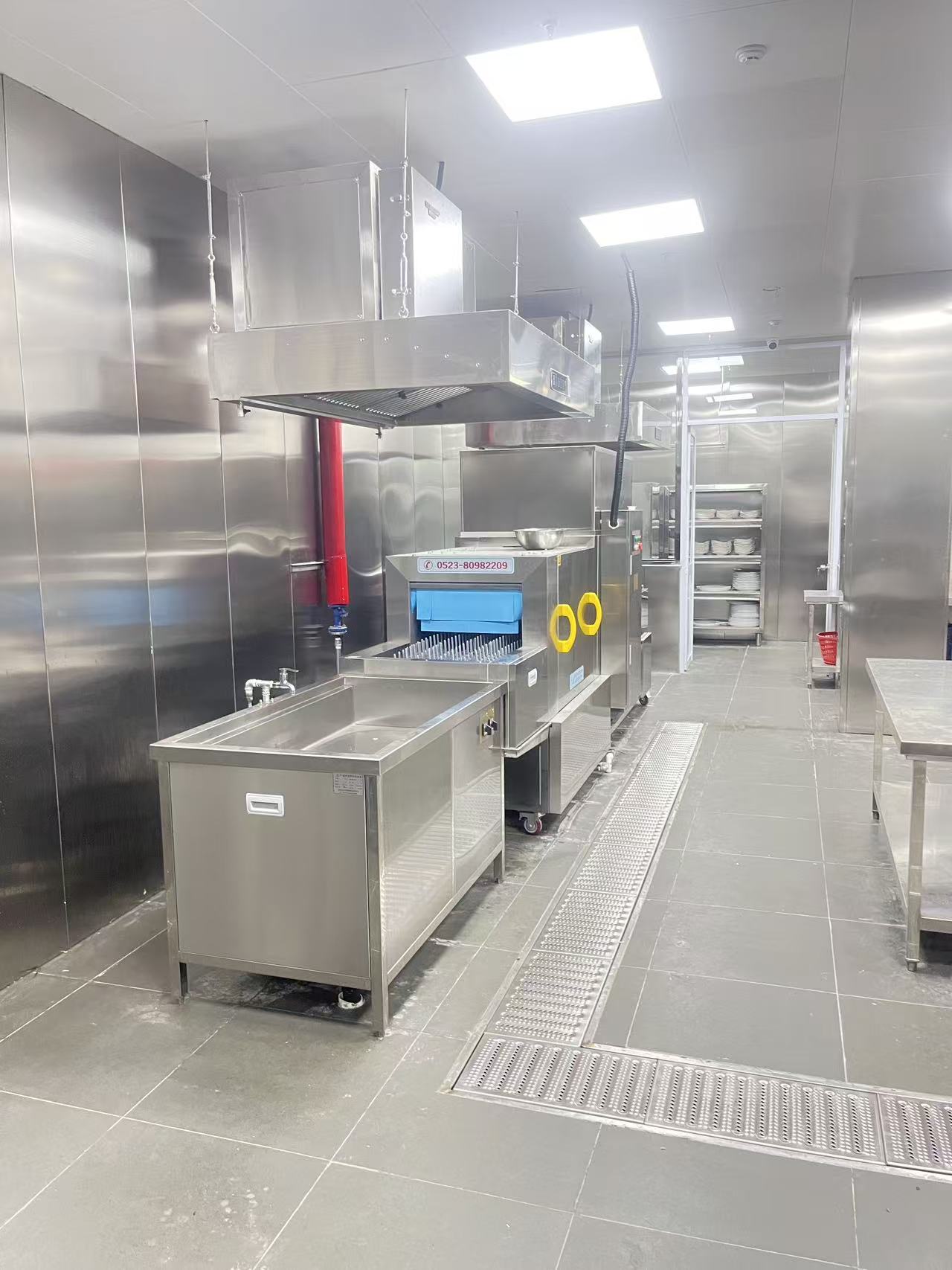
For independent restaurants, school canteens, and corporate catering facilities, dishwashing is frequently viewed through a narrow lens: why spend thousands of dollars on a commercial warewashing machine when a three-compartment sink and manual labor already get the job done?
The reality inside a working dishroom tells a different story. Manual dishwashing is consistently one of the highest operating expenses in food service, driven by three relentless drains: utility payroll, uncontrolled hot water waste, and tableware breakage. Upgrading from manual sinks to an automated commercial dishwasher is rarely an equipment luxury—it is an operational calculation designed to lower the cost per clean plate.
This guide compares manual three-compartment sink washing with automated commercial dishwashers using verified operational data, utility metrics, and a practical payback model.
1. The Three Hidden Financial Drains of Manual Sinks
A three-compartment sink (Wash, Rinse, Sanitize) appears inexpensive because its primary cost is invisible on equipment invoices. However, monthly operating statements reveal where the money actually goes.
A. Labor Payroll and Staff Turnover
Manual washing requires constant human handling. A restaurant serving 250 to 400 meals per day typically requires two dedicated kitchen staff members during peak lunch and dinner hours just to keep up with soiled pots, pans, and tableware. In high-volume operations, utility workers spend 5 to 7 hours per shift standing at sinks, scrubbing, rinsing, and drying.
Dishwashing positions also have the highest turnover rate in commercial kitchens, frequently exceeding 70% annually. Constantly recruiting, onboarding, and training new dishroom staff adds thousands of dollars in administrative overhead and leads to kitchen bottlenecks during busy service periods.
B. Uncontrolled Water and Heating Consumption
In a manual setup, kitchen staff frequently leave pre-rinse sprayers and fill faucets running continuously. A standard commercial sink faucet flows at 2.5 to 3.5 gallons per minute (9.5 to 13.2 liters per minute). Over a four-hour peak service, manual washing can easily consume 600 to 1,200 liters of hot water. Heating this large volume of water significantly increases commercial gas and electric bills every billing cycle.
C. Tableware and Glassware Breakage
Handling wet, soapy porcelain plates, ceramic bowls, and glassware by hand leads to frequent slips and drops. Commercial restaurants report an average monthly tableware breakage rate of 2% to 4%. For a restaurant with $4,000 in active tabletop inventory, replacing chipped plates and broken glassware costs $80 to $160 per month ($1,000 to $2,000 per year) in avoidable inventory loss.
2. How Commercial Warewashers Redefine Dishroom Economics
Commercial dishwashers replace continuous manual handling with consistent, automated mechanical cycles. Instead of human workers scrubbing each dish individually, the machine uses pressurized wash arms, high-temperature sanitizing rinse, and reusable wash water.
Water Recirculation Engineering
Modern commercial dishwashers do not drain their entire water volume after every cycle. The main wash tank keeps filtered wash water at 55°C to 65°C across multiple wash runs. Fresh water is only introduced during the final rinse cycle—strictly metered at 2.2 liters per 500x500mm rack on standard Oberon pass-through machines. This reduces total daily water consumption by up to 65% to 75% compared to open sink basins.
Thermal Sanitization Without Chemical Odor
Health codes require dishes to reach specific sanitization standards to prevent cross-contamination and bacterial growth. Human hands cannot tolerate water temperatures above 45°C without scalding, forcing manual sinks to rely on chemical chlorine sanitizers that can leave chemical residues, persistent odors, and skin irritation. A high-temperature commercial dishwasher rinses at 82°C to 85°C (180°F to 185°F), achieving thermal sanitization in 60 to 90 seconds while dishes air-dry rapidly from flash evaporation.
Predictable Labor Throughput
Instead of washing dishes one by one, a single operator scrapes food waste, loads dishes into standard 500x500mm racks, and slides them into the machine:
- Hood Type (Pass-Through) Machine: Processes 50 to 70 racks (900 to 1,260 plates) per hour with one operator.
- Rack Conveyor Dishwasher: Processes 120 to 200 racks (2,100 to 3,600 plates) per hour with two operators (one loading, one unloading).
Dishroom labor hours drop immediately by 50% to 70%, allowing cross-trained kitchen staff to assist in food prep or dining room service.
3. Side-by-Side Operational Comparison
The table below outlines the core operational differences between manual sink washing, a hood-type commercial dishwasher, and a high-volume rack conveyor system.
| Operational Parameter | Manual 3-Sink Station | Hood Type Dishwasher | Rack Conveyor Line |
|---|---|---|---|
| Staff Required (Peak) | 2 to 3 workers | 1 worker | 1 to 2 workers |
| Plates Cleaned Per Hour | 200 to 350 plates | 900 to 1,260 plates | 2,100 to 3,600 plates |
| Cycle Duration | Continuous scrubbing | 60 to 90 seconds | Continuous conveyor belt |
| Water Use Per 100 Plates | 150 to 250 Liters | 12 to 18 Liters | 8 to 14 Liters |
| Sanitizing Method | Chemical chlorine soak | Thermal rinse (82°C–85°C) | Thermal rinse (82°C–85°C) |
| Breakage Rate | 2.0% – 4.0% per month | <0.3% per month | <0.2% per month |
4. The 12-Month Financial Model: A Realistic Payback Calculation
To understand the return on investment (ROI), examine a standard mid-size restaurant or corporate canteen serving 300 meals per day (approximately 1,200 total tableware items, glasses, and utensils daily).
Annual Baseline: Manual 3-Sink Washing
- Labor Cost: 2 dedicated utility workers at $2,000/month each = $48,000 per year.
- Water and Heating Utility Cost: 800 liters/day at local commercial rates = approximately $2,400 per year.
- Tableware Replacement (Breakage): 3% monthly inventory loss on $3,500 inventory = $1,260 per year.
- Chemical Consumables (Manual Detergent & Sanitizer): $80/month = $960 per year.
- Total Manual Annual Cost: $52,620
Annual Operating Cost: Hood Type Commercial Dishwasher
- Labor Cost: 1 part-time/cross-trained worker handling washing for 3 hours/day ($1,000/month) = $12,000 per year.
- Water and Electricity Cost: 2.2L per rack across 65 racks/day = 143L/day. Annual utility estimate = $950 per year.
- Tableware Replacement: Racks protect ceramics from impact; annual breakage drops to <$250 per year.
- Commercial Detergent and Rinse Aid: High-efficiency automated dosing = $1,100 per year.
- Equipment Investment (One-Time Factory Direct): Commercial hood type machine, entry/exit tables, and racks = approximately $5,500.
- Total Machine First-Year Cost: $19,800 (including equipment purchase)
The Bottom Line: Payback in 5 to 7 Months
In Year 1, moving from manual washing to an automated hood type machine saves $32,820 in net operating expenses, completely paying off the initial equipment cost within 5 to 7 months of operation. In Year 2 and beyond, after the equipment is amortized, the annual recurring savings exceed $38,000 every single year.
5. When Should a Facility Transition to a Machine?
Every commercial kitchen reaches a tipping point where manual washing stops being economical. Upgrade planning should begin when any of the following operational signals occur:
- Daily volume exceeds 100 to 150 meals: At this volume, manual scrubbing inevitably creates dining room turnaround delays or forces cooks to stop prep work to wash pots.
- High staff turnover in the dish pit: If the kitchen struggles to retain utility staff or suffers from constant absenteeism on weekends, automated equipment removes dependency on hard-to-hire labor.
- Health inspection warnings on sanitization logs: Health inspectors require verified sanitizing logs. A commercial machine with temperature gauges provides indisputable temperature compliance proof on every wash run.
- Space constraints in tight kitchens: Compact pass-through dishwashers occupy as little as 0.65 square meters of floor space, fitting straight or corner dishroom configurations while replacing bulky three-sink lines.
6. Frequently Asked Questions
Does a commercial dishwasher require dishes to be pre-rinsed?
Yes. Plates should be scraped of large food solids and given a quick 3-second overhead spray before racking. Pre-scrapping keeps the main wash tank clean across dozens of cycles, ensuring optimal cleaning results without draining the tank.
What utility connections are required for a pass-through machine?
A standard commercial hood type dishwasher typically requires a 380V three-phase electrical supply (custom single-phase 220V available upon request), a 3/4-inch water inlet line with 2 to 4 bar dynamic water pressure, and a gravity drain connection.
How long does a commercial stainless steel dishwasher last?
With routine daily cleaning of scrap filters and periodic descaling, a commercial-grade food-safe SUS 304 stainless steel dishwasher typically delivers an operational service life of 8 to 12 years in high-volume hospitality environments.
Featured Warewashing Equipment
Explore industrial and commercial machines designed to meet the throughput and hygiene standards discussed in this article: