Crate Washer & Crate Washing Machine for Food Industry
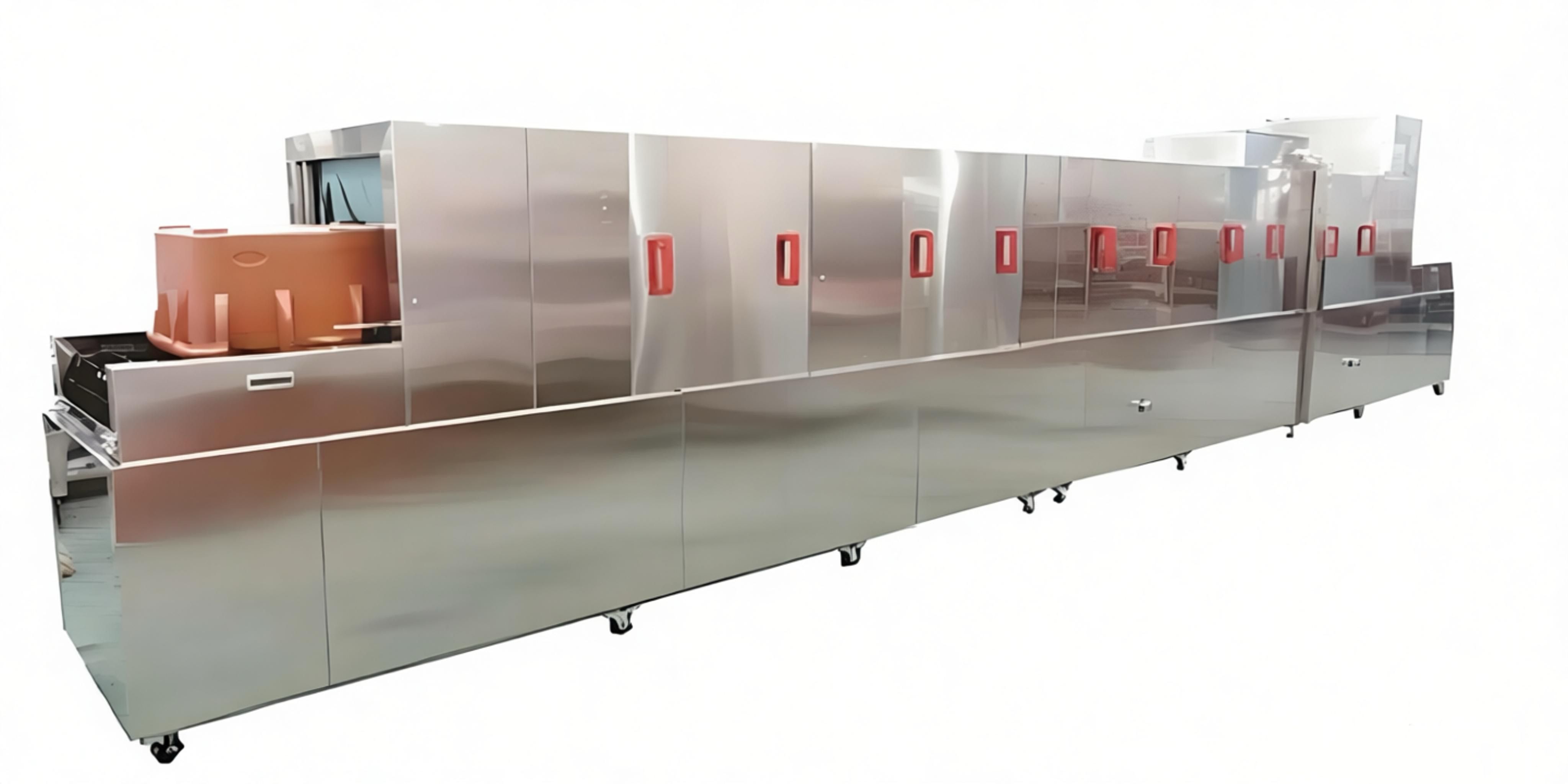
Specifications:
Superior Cleaning Coverage, No Blind Spots
Engineered with multi-angle spray nozzles (top, bottom, and sides) using optimized spray patterns to ensure thorough, high-standard cleaning with zero dead zones.
Contamination Control
Independent debris collection system and dual-layer filtration effectively remove residues, improving sanitation while reducing manual cleaning effort.
Adjustable for Different Crate Sizes & Soil Levels
Flexible guide rails and height-adjustable spray bars accommodate various crate dimensions, while variable speed control adapts to different levels of soiling.
Customizable to Your Operation
System parameters and dimensions can be tailored to match specific crate designs and operational requirements for optimal performance.
Energy-Efficient Heating with Precise Control
Supports both steam and electric heating with automatic temperature control, balancing energy efficiency with consistent cleaning results.
Easy Operation & Maintenance
User-friendly controls with adjustable speed and temperature. Foldable spray pipes and fully accessible front/rear doors simplify inspection and cleaning.






Which crate washer fits your operation?
A crate washer is specified by three numbers: the worst-case crate size, the crates per hour at peak, and the soil level after delivery routes. If you wash one crate type at high volume, a dedicated tunnel machine is the most efficient washing machine for crates. If you mix crates, totes, and pans, choose a wider-chamber model with adjustable guides — the full decision process is in our crate washer buying guide.
Reference layout: a crate washing line in the dishroom flow
A typical installation places the crate washer where dirty crates naturally return — beside the dock or at the end of the wash line, with a soiled-side stacking area upstream and a clean, dry staging rack downstream. Crates are tipped and scraped into the de-trashing unit, run through pre-wash, main wash, rinse, and heated blow-off, then exit stack-ready on the clean side. When planning the installation, reserve: machine footprint plus 1.5 m loading and unloading zones, floor drain at the wash tank, power or steam supply, and water treatment for hard-water sites.
Oberon provides the full dishroom equipment specification with every quotation — layout drawing, utility schedule, and crate flow direction — so installation contractors have everything before the machine ships.
What sets an Oberon crate washing machine apart
Every Oberon crate cleaning machine is built as a manufacturer system, not an assembly of generic parts: stainless frame, welded spray manifolds matched to crate rib patterns, dual filtration, and options for steam or electric heating. OEM partners can brand the machines and adapt dimensions for regional crate standards.
When comparing quotes from the crate washing machine manufacturers on your shortlist, ask for the tested crates-per-hour at your soil level, the water consumption per crate, and the spare parts list — then compare the cost per washed crate over five years, not the purchase price. For the full decision process, read our crate washer buying guide.