What Is Warewashing? Process, Equipment & Temperatures
Warewashing is the cleaning and sanitizing of dishes, glassware, utensils, and cookware. Learn the process, the machine types, and the temperatures that matter.
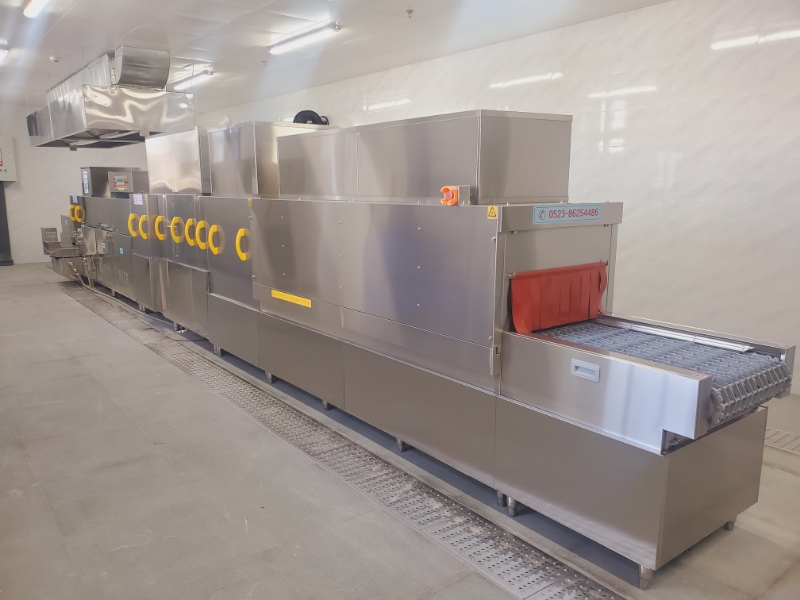
Warewashing is the cleaning and sanitizing of dishes, glassware, cutlery, cookware, trays, and other food-contact items in a commercial kitchen. You will also see it written as ware washing or warewash, and a machine that does the job is called a warewasher. This guide explains the stages of the process, the main types of warewashing equipment, the temperatures and sanitizers involved, and how to choose a system.
The warewashing process: five stages
Whether it is done by hand in a three-compartment sink or by machine, warewashing follows the same logic. Machines combine the stages in one chamber or in a series of zones.
- Scraping and pre-rinse. Food waste is removed before washing so the wash water stays cleaner for longer. Some machines automate the scraping.
- Washing. Heated water, detergent, and mechanical action from spray arms or jets lift soil off the surface. Ultrasonic cavitation can be added for baked-on or greasy soil.
- Rinsing. Clean water removes detergent and loosened soil.
- Sanitizing. Ware is sanitized either with heat, in a hot final rinse, or with a chemical sanitizer.
- Drying. Ware dries from residual heat or with forced air, so it can be stacked without towels.
Types of warewashing equipment
The right machine depends on how many items you wash per hour, what kind of items they are, and how much space you have.
- Undercounter dishwashers suit bars, cafes, and small restaurants with limited space and moderate volume. See our undercounter commercial dishwasher.
- Door type (hood type) dishwashers are pass-through machines whose hood lifts so racks can be loaded and unloaded between a dirty table and a clean table. See our door type and hood type dishwashers.
- Conveyor dishwashers move racks through the machine continuously for busy restaurants, hotels, and institutional kitchens. See our commercial conveyor dishwasher.
- Flight type dishwashers carry items through on a continuous belt for high-volume canteens, central kitchens, and hotels. See our flight type dishwasher.
- Pot washers and utensil washers handle cookware, kitchen tools, and trays that standard dishwashers handle poorly. See our commercial pot washer and utensil washer.
- Tray, pan, and crate washers clean baking trays, GN pans, and reusable crates and totes in bakeries, central kitchens, and food production. See our industrial tray washer and crate washing machine.
Oberon range at a glance
Rated throughput as listed on each product page.
| Model | Type | Rated throughput |
|---|---|---|
| Uni AH | Door type (hood type) | 70 racks/hour |
| SonicFlow | Hood type with ultrasonic pre-wash | 70 racks/hour |
| Uni UT | Utensil washer | 70 racks/hour |
| Omni Compact | Flight type | 2,000 plates/hour |
| ModuClean | Flight type | 3,000–5,000 plates/hour |
| EcoPrime | Flight type | 3,000–5,000 plates/hour |
| Uni FT | Flight type | 5,000–7,000 plates/hour |
| OmniClean | Flight type | 3,000–10,000 plates/hour |
Temperatures and sanitizing
Machines sanitize in one of two ways.
- High-temperature (hot water) sanitizing. The final rinse reaches about 82°C / 180°F at the manifold for stationary rack and single-tank machines, and 71–82°C / 160–180°F on conveyor systems. The heat sanitizes the ware, which then dries quickly. These machines need booster heating and good ventilation.
- Low-temperature (chemical) sanitizing. The machine washes at roughly 49–60°C / 120–140°F and sanitizes with a chemical, usually chlorine at 50–100 ppm with a defined contact time. The dosing has to be monitored.
Required temperatures and concentrations differ by machine class, country, and local health authority, so follow the machine’s data plate and your local rules. Our guides cover this in more detail: high temp vs low temp dishwashers, commercial dishwasher temperature, and HACCP compliance for commercial dishwashers.
How to choose a warewashing system
Start with the numbers that decide the machine class, then check the room.
- Peak volume: racks or plates per hour at the busiest hour, not the daily average.
- Item mix: plates and glasses only, or also pots, trays, crates, and large containers.
- Layout: a one-way flow from the dirty table to the clean table, with room for loading, unloading, and service access.
- Utilities: water, drainage, power, and ventilation.
- Sanitizing method: hot-water rinse or chemical, and who monitors it.
For sizing, see the commercial dishwasher size guide. For the room, see the installation requirements. To compare machine classes, see commercial dishwasher types.
Frequently asked questions
What is warewashing?
Warewashing is the cleaning and sanitizing of dishes, glassware, utensils, cookware, and other food-contact items in a commercial kitchen, by hand or by machine.
What is a warewasher?
A warewasher is a machine that washes, rinses, and usually sanitizes and dries ware. The category includes undercounter, door type, conveyor, and flight type dishwashers as well as pot, utensil, tray, and crate washers.
What is the difference between manual and mechanical warewashing?
Manual warewashing is done by hand, typically in a three-compartment sink for wash, rinse, and sanitize. Mechanical warewashing uses a machine that controls water temperature, detergent, spray pressure, and contact time. See hand washing vs commercial dishwasher for a labor, water, and payback comparison.
How do I know which warewashing machine I need?
Match the machine to your peak items per hour, your item mix, your layout, and your utilities. Send us this information and Oberon engineers will recommend a configuration.
Oberon is a commercial dishwasher and warewashing equipment manufacturer based in Taizhou, Jiangsu, China. Tell us your kitchen type, item range, and peak volume and our engineers will recommend a machine and provide a quotation.
Featured Warewashing Equipment
Explore industrial and commercial machines designed to meet the throughput and hygiene standards discussed in this article: